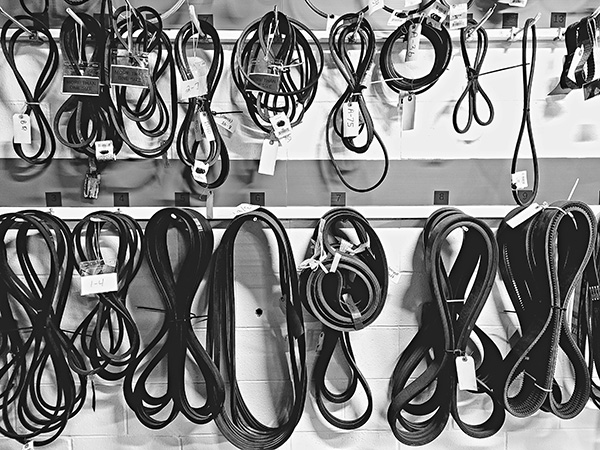
You start the car, and there it is, that sharp squeal that turns heads in the parking lot. Sometimes it vanishes in a few seconds, which makes it tempting to ignore. Other times it comes back at the worst moments, like when you turn on the A/C or pull out into traffic.
A squealing belt can be harmless, but it can also be your first hint that something is slipping, misaligned, or about to fail, and the only way to know is to pay attention to how and when it happens.
What The Serpentine Belt Does
The serpentine belt is the long belt on the front of the engine that drives key accessories. Depending on the vehicle, it may spin the alternator, power steering pump, A/C compressor, and water pump. It relies on proper tension and clean contact to transfer power without slipping.
When it squeals, that sound is usually friction. The belt is sliding instead of gripping, which creates heat and noise. The important part is figuring out why it is slipping, because the belt is often reacting to a different problem.
When A Quick Squeal Can Be Normal
A brief squeal right at startup can be fairly common, especially after the car has sat overnight. Moisture in the air, morning dew, or a light film of water on the pulleys can reduce grip for a moment. On some vehicles, a quick squeak in cold weather can also happen if the belt is stiff until it warms up.
You may also hear a short squeal when an accessory load suddenly kicks on, like the A/C compressor engaging. If it is rare, short, and does not repeat day after day, it may not mean you have an urgent issue. Still, it is worth keeping an ear on it, because normal noises do not usually become more frequent.
When Squealing Usually Means There Is A Real Issue
If the squeal lasts more than a few seconds, happens regularly, or shows up during driving, it is usually telling you something. The most common cause is a worn belt that has glazed over, meaning the surface has become smooth and hard from heat. A glazed belt slips more easily and tends to squeal under load.
Tension problems are another big cause. Many vehicles use an automatic belt tensioner. When it weakens, it cannot keep steady pressure on the belt, so the belt slips when you accelerate, turn the steering wheel, or switch on the A/C. Misalignment can do it too. If a pulley is slightly crooked or a component is loose, the belt may ride off-center and squeal as it scrubs against a pulley edge.
Noise Patterns That Help Narrow Down The Cause
How the squeal behaves can point you in the right direction. If it squeals only at startup and then stops, belt condition and moisture are high on the list. If it squeals when you turn the steering wheel, the power steering pump load may be exposing a weak belt or tensioner.
If the squeal gets louder when the A/C is on, the belt may be slipping under the added compressor load, or the compressor pulley or clutch may have issues. If it squeals during acceleration or at higher RPM, that often points toward a tensioner that is not holding steady, or a pulley that is starting to drag.
Common Pulley And Tensioner Problems That Hide Behind The Belt
A lot of people replace the belt and feel good for a week, then the squeal comes back. That usually happens because the belt was not the only problem. Pulleys and tensioners wear out too, and when their bearings get rough, they can create resistance that makes the belt slip.
Idler pulleys are a common culprit. They do not power an accessory, but they guide the belt and keep routing correctly. If an idler bearing starts to fail, it can make noise and heat, and it can throw belt alignment off. Tensioner pulleys can do the same thing. In some cases, the pulley face wears or becomes contaminated, reducing grip even if the belt is new.
Owner Mistakes That Make Belt Squeal Worse
One mistake we see often is spraying belt dressing or lubricant on the belt. It can quiet things temporarily, but it usually attracts dirt and makes the belt slip more over time. Another is overtightening on systems with manual adjustment, which can overload bearings in accessories and shorten their life.
Ignoring a wobbling pulley is another issue. If you see a belt tracking oddly or a pulley that looks like it is shaking, the belt is often a symptom, not the cause. Continuing to drive that way can quickly wear the belt and risk a sudden failure.
Get Serpentine Belt Service in Arlington, VA with J & F Motors Ltd
We can inspect your belt, tensioner, and pulleys, then pinpoint why the squeal is happening instead of just throwing a belt at it. We’ll check alignment, bearing condition, and accessory loads so the fix actually lasts.
Call J & F Motors Ltd in Arlington, VA, to schedule an inspection and get that squeal handled before it turns into a breakdown.