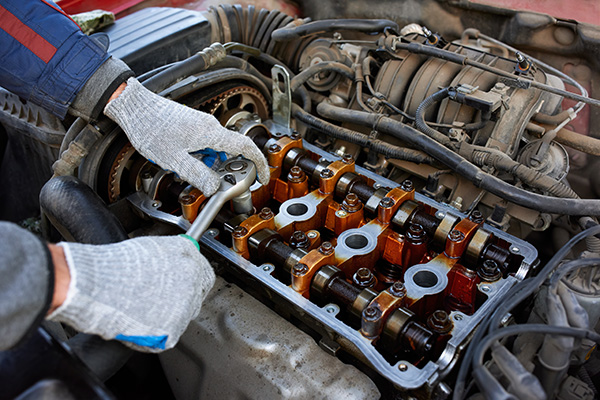
A leaking valve cover gasket often starts as a small nuisance and quietly grows into a bigger problem. You might smell a bit of oil, see a light haze under the hood, or notice the oil level dropping faster than it used to.
Because the car still drives, it is easy to put off, but leaking oil can damage ignition parts, rubber components, and even the catalytic converter if it goes on long enough.
1. Burning Oil Smell or Light Smoke From Under the Hood
One of the earliest signs is often your nose. A valve cover gasket sits at the top of the engine, and when it starts to leak, oil can drip onto hot parts underneath. As that oil burns off, it creates a sharp, slightly sweet burned oil smell that you may notice when you stop at a light or park in the driveway.
Sometimes you can also see a light wisp of smoke coming from the edges of the hood after a drive. It may be more obvious on cold days or after a longer trip when everything is fully warmed up. If the smell seems to come from the front of the car and not the exhaust, it is worth having the top of the engine inspected.
2. Oil Spots on the Ground or Wet Areas Around the Engine
Valve cover leaks can start small enough that nothing reaches the ground, but over time, oil makes its way down the sides of the engine. You might spot fresh, wet streaks when you look under the hood or see oil starting to collect on lower components.
Once the leak grows, a few drops may reach your driveway or garage floor. Those spots often show up:
- Near the front of the engine bay under the belt and pulley area
- Close to the middle of the car where the engine meets the transmission
- Farther back if oil is blown along the underside while driving
- Plenty of things can drip fluid, so the key is fresh, amber to dark brown spots that match engine oil and show up more often after longer drives.
3. Oil Level Dropping Faster Between Oil Changes
A gentle valve cover leak may not leave big puddles, but it can slowly lower your oil level over time. Many drivers first notice this when they need to add a quart before the usual oil change interval, even though there is no obvious smoking from the tailpipe.
Keeping an eye on the dipstick is helpful here. If you top off, drive normally, and see the level drop again well before the next service, that extra oil has to be going somewhere. When we inspect engines with this complaint and find oil staining along the top and sides of the engine, a tired valve cover gasket becomes a strong suspect.
4. Rough Running, Misfires, or Oil on Ignition Components
On many engines, the valve cover gasket also seals around the spark plug tubes. When that part of the gasket fails, oil can seep into the plug wells and soak ignition coils or plug boots. From the driver’s seat, it often feels like a slight shake at idle, hesitation on acceleration, or a check engine light with misfire codes.
If a technician pulls a coil and finds it wet with oil or sees oil pooled around a plug, that is a clear sign that the leak has moved beyond a simple external drip. Left alone, this can ruin coils and plugs, and misfires over time are hard on catalytic converters. Fixing the gasket and cleaning up the area usually saves money compared to repeatedly replacing ignition parts.
5. Oily, Dirty Valve Cover and Soft or Cracked Rubber Nearby
A healthy valve cover area usually looks dusty but dry. With a leaking gasket, you will often see a film of oil along the edges where the cover meets the head. Dust and grime stick to that film, turning it into a dark, greasy band. On some engines, you can even see small beads of fresh oil forming at the corners.
Oil does not just sit there. It can soften rubber hoses, wiring insulation, and nearby mounts. Over time, that can lead to brittle hoses, swollen rubber pieces, and connectors that do not seal properly. When we inspect engines and see a combination of oily residue around the valve cover and aging rubber in that same area, we know the leak has been going on for a while.
When to Stop Watching and Plan a Repair
A light seep that only leaves a faint stain might be safe to monitor for a short time, as long as the oil level stays stable and there are no smells or misfires. Once you notice stronger odors, visible smoke, repeated top-offs, or any sign of oil in the spark plug wells, it is time to schedule a repair rather than waiting.
Replacing the valve cover gasket is also a good chance to inspect the cover itself for warping and to check nearby hoses, coils, and wiring for damage. Taking care of those items at the same time often prevents repeat visits and keeps the top of the engine clean and dry for years.
Get Valve Cover Gasket Repair in Arlington, VA, with J & F Motors Ltd
We see leaking valve cover gaskets every week and know how to tell a mild seep from a leak that is starting to cause real problems. We can inspect your engine, check oil usage, and look at ignition components so you get a clear picture of what needs attention now.
Call J & F Motors Ltd in Arlington, VA, to schedule valve cover gasket diagnosis and repair so you can stop chasing oil smells and keep your engine protected.